Ali Saydam
  • Bersay
  • TV Yayınları
  • Röportajlarım
  • Entelektüel Mirasım
  • Yazılarım
    • Yeni Şafak Gazetesi
    • Marketing Türkiye
    • Z Raporu / Derin Ekonomi
    • TIMREPORT
    • Sabah Gazetesi
    • Akşam Gazetesi
    • Akşam Kitap Eki
    • Diğer
  • Kitaplarım
    • Algılama Yönetimi
    • Eş ve Müşteri Nasıl Kaybedilir?
    • İktidar Yalnızlıktır
    • Vazgeçmek Özgürlüktür
    • Perception Management
    • How to Lose Wives and Clients
    • Wahrnehmungs Management
    • Türkiye Perspektifinden Kamu Diplomasisi >
      • 16.03.2015 – Ortak Akıl Çalıştayı – UN RO-RO
      • 21.03.2015 – Ortak Akıl Çalıştayı – Ttec
      • 27.05.2015 - Media Relations - Yeşilay & AB - Staff Training Program
      • Siyasal İletişim Yönetimi - Marmara Belediyeler Birliği / Uludağ
      • Oradaydim Orada Olacagim
  • Galeri
    • Video Galeri
  • İletişim
  • Eng

“Everything that can be thought at all can be thought clearly. Everything that can be said can be said clearly.”                                                                                                                                                                                                                  /​   Ludwig Wittgenstein

Picture
Picture
Picture

About Me 

Picture
Ali Saydam 
Journalist, Columnist, PR and Communications Specialist 

Ali Saydam was born in Ankara in 1946. After his graduation from İstanbul Erkek Lisesi (İstanbul Boy’s High School) in 1965 and he studied Chemistry at Bern Üniversitesi (Bern University) between 1965-1974.
Saydam worked as a correspondent at Milliyet (newspaper) and Hey (magazine) between 1978-1981. He was the General Manager of Karacan Yayınları (Karacan Publications) between 1982-1986 and Sabah Gazetesi Dergi Grubu (Sabah Newspaper’s Magazine Group) between 1986-1988. In 1988, he co-founded Güneş Yayınları (Güneş Publications) and worked as the General Manager until 1990.
 
In 1990, Bersay İletişim Danışmanlığı (Bersay Communications Consulting) has founded by him. Saydam is still the Honorary President of the company, offering strategic communications consulting for multiple customers of Bersay.

Ali Saydam gave lectures for ten years at İstanbul Üniversitesi İletişim Fakültesi (Istanbul University Faculty of Communications) for undergraduate and postgraduate classes. He is still teaching Customer Relations Management at Public Relations Department in Bahçeşehir Üniversitesi, (Bahçeşehir University) Faculty of Communications. 

Ali Saydam started his column at Sabah newspaper in 2002. Until 2006, he wrote about communication problems in every field. Between 2006-2012 he was a columnist at Akşam newspaper. He currently writes articles for Marketing Türkiye dergisi (Marketing Turkey magazine) starting from 2005 and Yeni Şafak gazetesi (Yeni Şafak newspaper) since 2011. Saydam also writes a column for TİM Report, the magazine of Turkish Exporters Assembly and Derin Ekonomi (which adopted a new name as Z Raporu), the economy magazine of the Yeni Şafak Group.
 
His first book Algılama Yönetimi (Perception Management) published in 2005. After that he wrote Eş ve Müşteri Nasıl Kaybedilir? (How to Lose Wives and Clients) in 2010. Both translated in English and Algılama Yönetimi has translated also in German. His latest books, Vazgeçmek Özgürlüktür (Giving up is Freedom) in published in 2011, and İktidar Yalnızlıktır (The Power is Loneliness) in 2012.

​
Books​

Perception Management
Picture
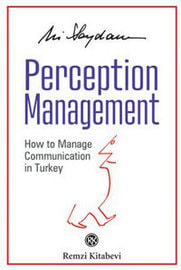
"Perception Management: How to Manage Communication in Turkey"

Ali Saydam's famous book that has been published 5 times in Turkish, is now available for English readers as well.

This work of Ali Saydam- who is one of the opinion leaders in the area of Public Relations- ; is to be a bedside book for scientists, students and managers who want to learn Public Relations both in general and with examples focused  specifically  on Turkey.


How to Lose Wives and Clients

Picture
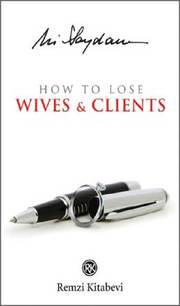
"Can love or any other relationship exist without coyness? Of course not. Even the special client you take for granted, or a spouse needs "affection" as if they could leave any minute,” says Ali Saydam. Taking the similarities between “client” and “spouse” as his starting point, Saydam explains how to manage relationships and reveals “5 important secrets” that will help prevent losing a spouse or a client.
The book seeks solutions to a variety of problems including "who manages whom; the 7 deadly sins in relationships; the fine line between love and hate; advice that don't just remain on paper; the number one enemy ıof a relationship; complaints and crises; not listening; the level of insistence."  The aim is to help the reader gain the reflex of not losing a client or a spouse.
This book is the product of the series of conferences titled “How to Lose Wives and Clients." that Saydam has been giving since 2002 and the “chronic capacity for error and blunder” that he has been talking about in those conferences. Saydam owes his successful career of 30 years to the sum of his experiences. These experiences have culminated in the idea that two doors need to be kept open: to be able to “read" the painful and costly losses, and to be able to “pay the necessary price."
According to Ali Saydam, just like a client is one of the fundemantal components of capitalism, a man-woman  relationship is one of the most natural elements of human nature. In both of them, if you don't have "emotional acceptance" and you insist on not "reading" that it does not exist and refuse to pay the "necessary price", then shame on you!

Ali Saydam says, "It does not matter whether it is a client or a man or a woman;, the important thing is to conquer the castle. This conquest is possible by "constantly" struggling to keep every form of satisfaction at the highest level". Is it easy? No! How? It is best you take a look at the 10 mosaic pieces that Ali Saydam presents and try to see it as a whole:


Question 1: Who manages whom and how? 
Question 2: What distance to keep?
Question 3: What do standards destroy?
Question 4: How far can a partnership go? 
Question 5: What is the cost of uncertainty? 
Question 6: How are complaint and crisis confused?
Question 7: How does a crash become unavoidable?
Question 8: What do we lose by "not listening and failing to make others listen"?
Question 9: When is there too much of a good thing?
Question 10: Is there a way out?
​

Güncel Tweetlerim

Tweets by @asaydam
www.alisaydam.com - 2014